Introduction
Today I decided to take my telescope, the Opticon Pulsar 76F700, for a spin. This was the second or third time I took it out, mainly because I bought it during the winter period, and I couldn’t find good visibility and decent weather; usually, it was very cloudy and cold. This time, though, it was nice outside, warm enough not to bring my jacket, and there were almost zero clouds in the sky. This is what the sky looked like from my back garden. That bright circle in the middle is the Moon – my main target for that night.
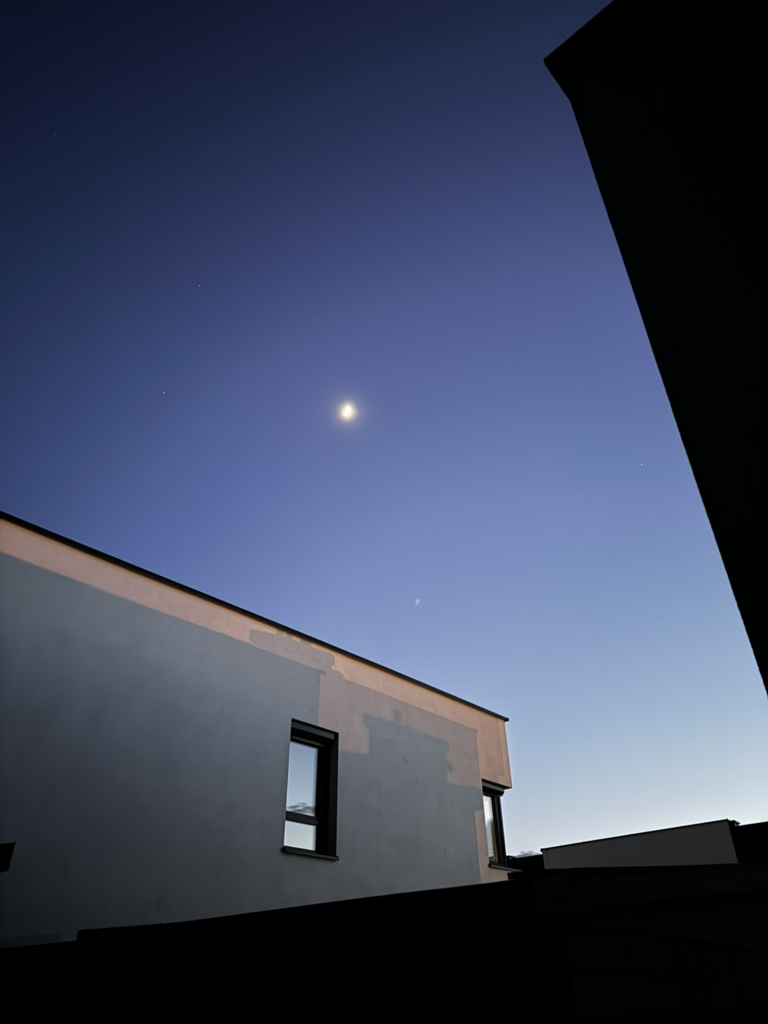
First of all, my focus scope was not perfectly aligned, which is a bit of a bummer, since I couldn’d simply point the crosshair at the moon, I had to stil align the telescope once I started observations, but it wasn’t too hard fortunately. I was ready to start the observations.
The Moon
First I started with the ocular Huygens 20mm (H20mm), which was great – the entire Moon fit in the view, I could easily find focus and I was able to see a lot of stunning details of the only one natural Earth satellite.
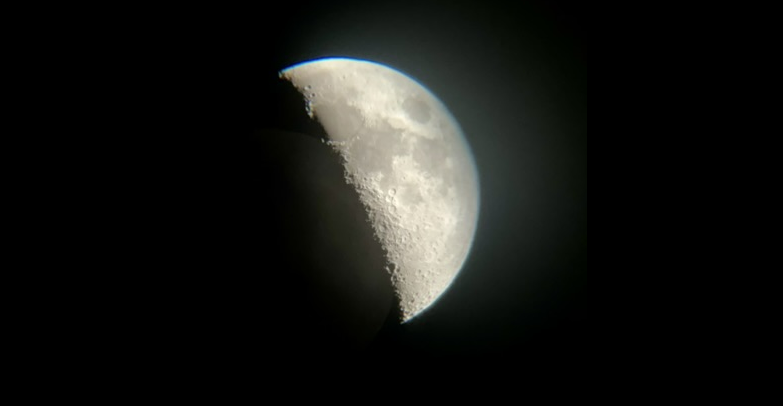
After initially observing through a lower magnification eyepiece, I switched to the Huygens 12.5mm (H12.5mm) which provided an even better viewing experience. The use of this eyepiece still allowed for easy focusing, but with the added benefit of increased magnification. This slight boost made it possible to discern even more intricate details, enhancing my overall observation quality.
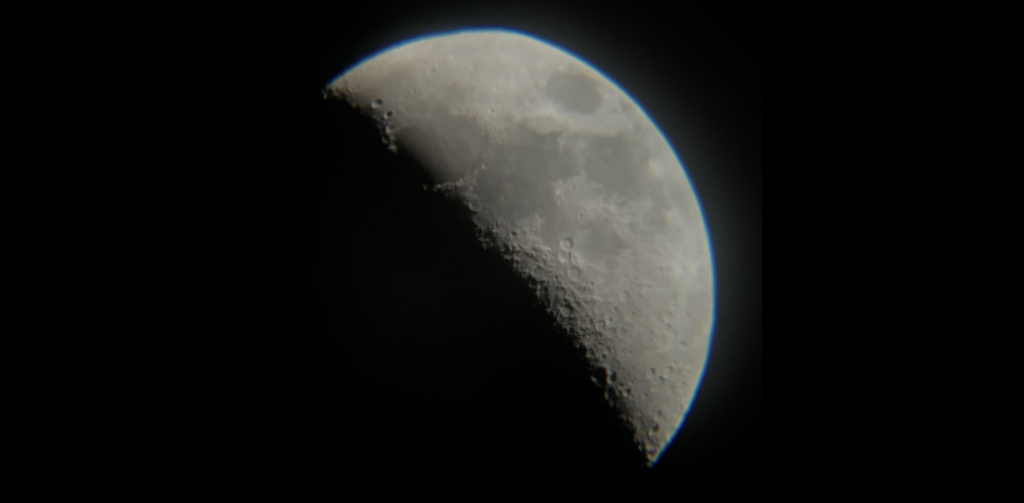
Finally, I tried the SR4mm ocular – unfortunately, this one wasn’t working great. It was very hard to point the telescope in the right direction, I had to do it manually look for the target and the finder scope wasn’t helpful at all. Then I couldn’t find the focus, it was very narrow, plus turning the knob was actually changing my view. I was also under the impression that the moon was moving, so I had to adjust pretty quickly.
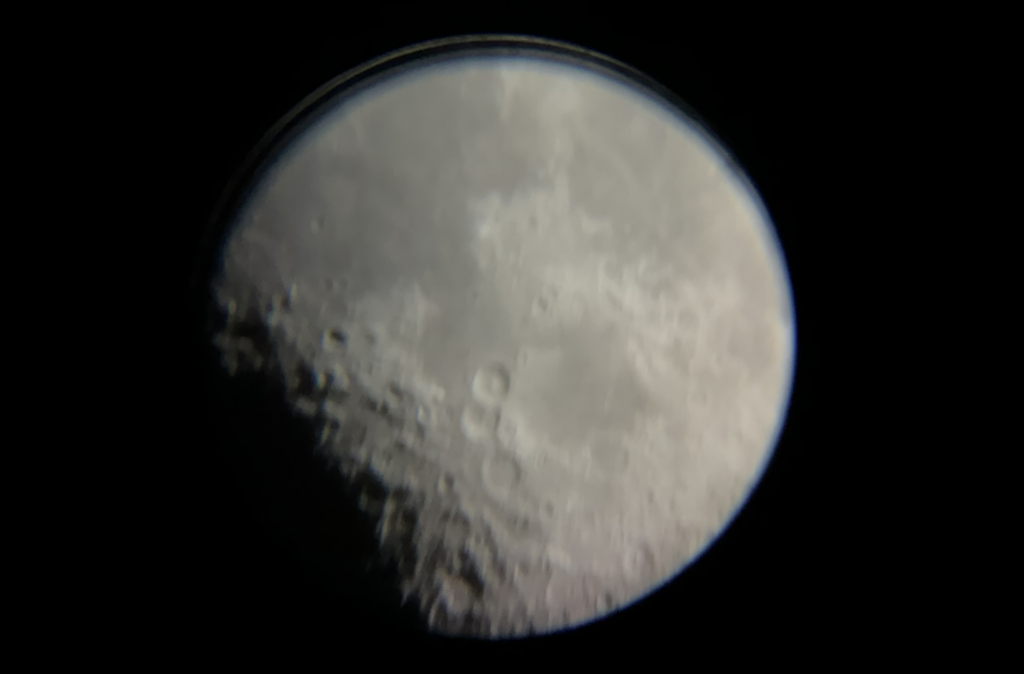
The final try was to use the Barlow, but I wasn’t stunned; it was very hard to find focus, and even after I found it, the image was blurry. I think this might be due to the low quality of the piece itself; maybe I’ll do a little research on which Barlow is actually good and how to use it.
The Big Dipper and the Leo Constellation
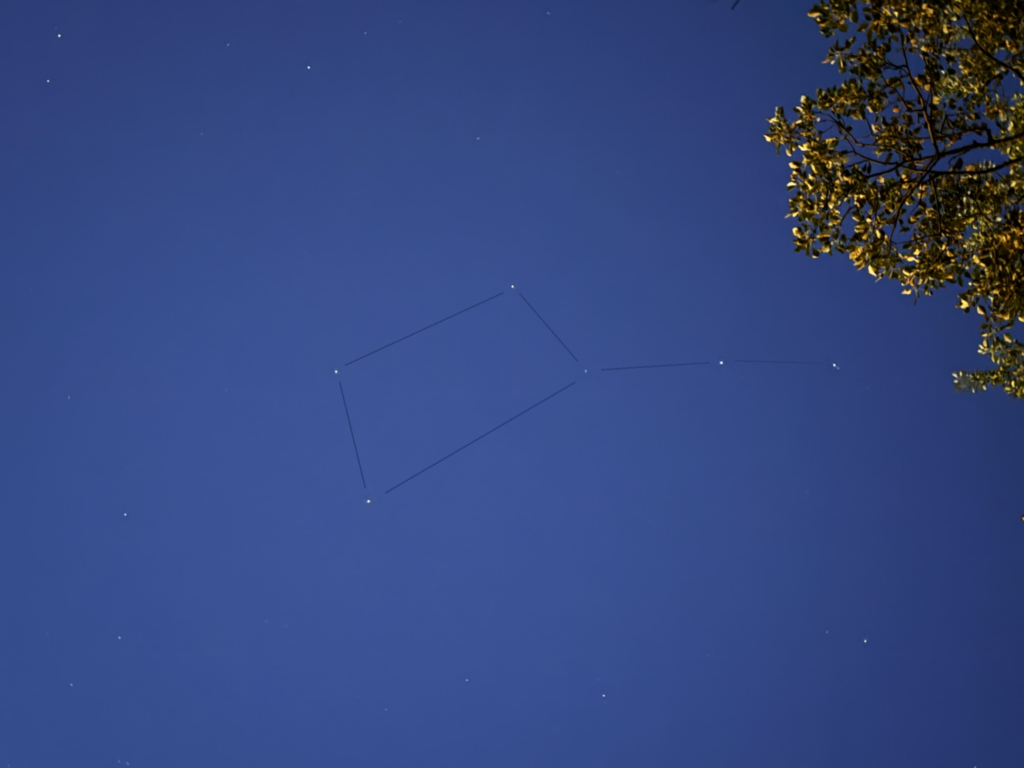
There was also something that I’ve noticed, and in fact, for the first time ever, it was visible with the naked eye. It was really amazing to recognize the pattern and actually be able to name it and really see it from your back garden. The first one was the Big Dipper. I think I’m missing one star; it was covered by the tree, and I wasn’t able to identify this while I was taking the picture.
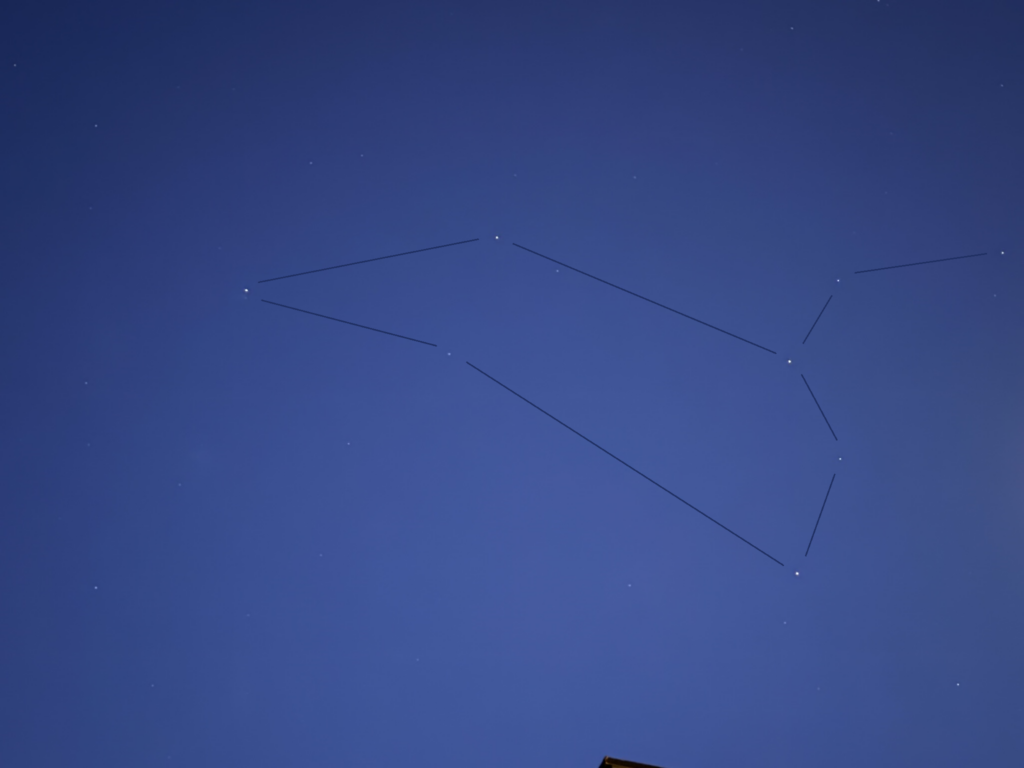
The second was the Leo constellation. This one I found by using the application, but then once I saw this, I was able to notice it right away. Similar to before, I’m missing this one star in this constellation, simply because I wasn’t aware of this.
Summary
Overall, one of the things that was very annoying was the stability of the telescope; every little movement affected the view, even if I tried to be gentle, I still sometimes lost the view. Secondly, it was the blurriness of the view; perhaps the temperature was dropping, and that was the reason. Third was the SR4mm; I wasn’t able to make that work. Fourth, the mismatch between the actual view and the finder scope. And finally – taking pictures with my iPhone. It was tricky, very hard. The images looked great on the phone, but (as you saw) are not looking decent on the iPhone.
However, being able to actually look at the moon with your very own eyes, was extremely rewarding experience. Trust me, the actual picture that you see is so much better than any picture you see over the internet. Truly stunning, it really allows you to feel that you are a part of something bigger.
Next, I’ll try to take better pictures. Maybe I’ll make use of my old DSLR camera. Eventually, I need to find other targets that my telescope is recommended for too – Jupiter with moons, star constellations, the Moon, Mars, and Venus.